Back in January 2026, Ofcom proposed splitting the 6GHz spectrum to allow sharing of this upper 6GHz band between Wi-Fi and mobile services at the same time. The regulator has now launched a new consultation on expanding access to this 6 GHz band, detailing areas which it considers ‘high density’ and should therefore be made available for mobile use.
The plan announced in January was that low-powered Wi-Fi devices would be able to use the 6GHz spectrum by the end of the year. The bottom 160MHz (6425-6585 MHz) would have Wi-Fi priority, and the upper end (6585-7125 MHz) would have mobile priority. For the Wi-Fi devices to have access to the upper band, they would need to be under the control of an Automated Frequency Coordination database, which would define if they are in a region where access was possible.
Following feedback to previous consultations, Ofcom is now proposing a set of high-density areas for 6GHz, which are based on the mmWave areas, but has some additions. There are no changes expected to the mmWave spectrum areas. The objective is to enable the frequencies to be used where there will be extensive deployments by mobile operators and avoid areas where there would be limited or no deployments. This has limited the deployment to 88 areas or cities. Ofcom will potentially authorise mobile use outside of these areas on a local licensing basis.
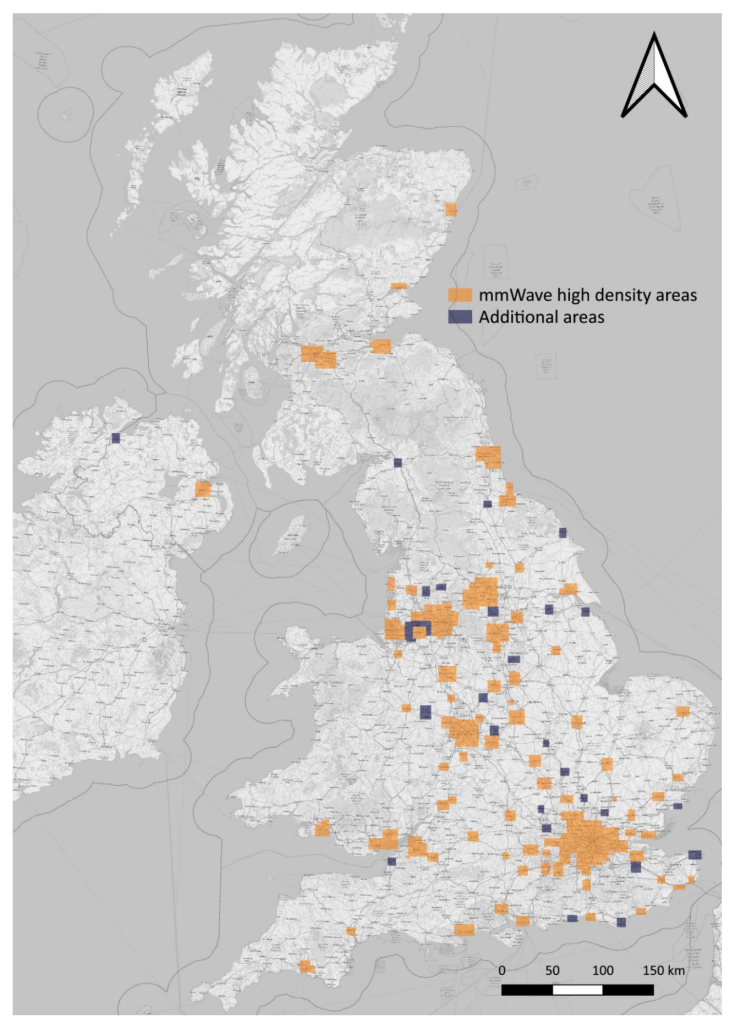
Other users also have licenses to use spectrum in the upper 6GHz band. Fixed links are used, and they would receive interference from mobile use in this band. Ofcom’s preferred option to deal with this is to clear these links out of the high-density 6GHz areas. The cost of moving out of the 6GHz band is expected to be borne by the licensee or user of these fixed links and covers around 180 links with 20 different licensees. The list of those affected includes a couple of broadband providers – Airband Community Internet and County Broadband, alongside BT. No new fixed link license applications would be considered in these high-density areas going forward.
Other users of the spectrum include Wireless Cameras (Programme Making and Special Events), which use some of the spectrum as part of an overlap from the PMSE 7GHz allocation. Ofcom propose to remove the 7110–7125 MHz section of this within five years. Radio Astronomy also uses the spectrum, and the remedy for this is to limit the interference to -159 dBm/50kHz in the 6650‒6675.2 MHz band.
The Ofcom consultation will run until 6 July 2026, and the regulator plans to publish its decisions later this year.
 Test your broadband speed
 Follow us on X for the latest broadband news


Leave a reply