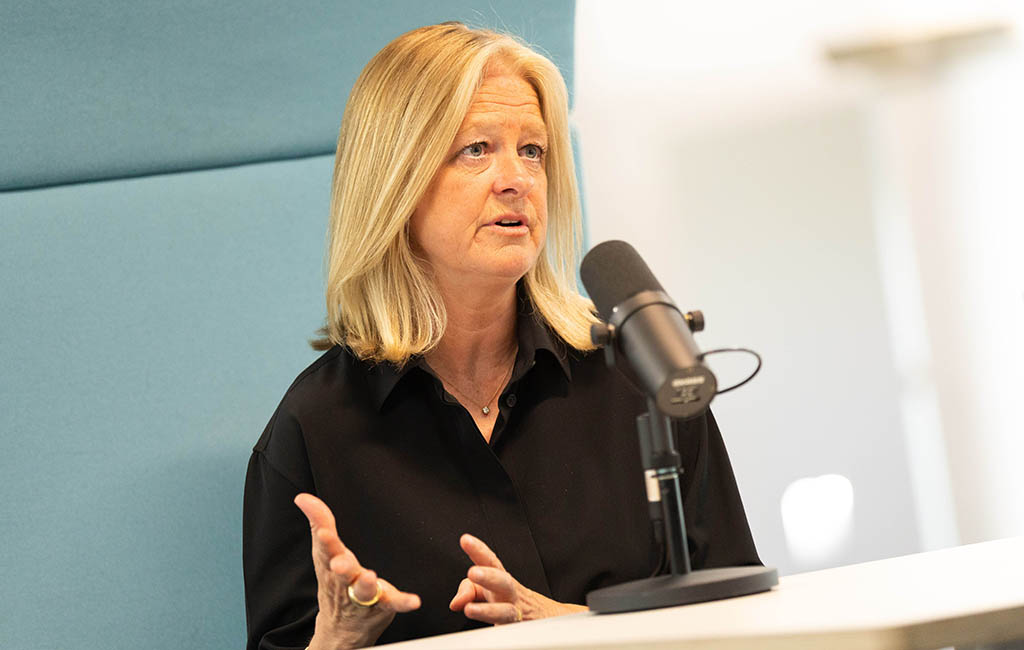
Richard Tang, CEO of Zen Internet, has produced many interesting videos talking to senior leaders across the altnet industry. This time, he interviewed Allison Kirby, Group Chief Executive of BT Group:
Here’s our summary of the interesting points from this video:
The first year
Allison joined the board of BT Group in 2019 as a non-executive director, a year before she was appointed Chief Executive of Swedish telco Telia. Prior to this, she had also held roles with Scandinavian telcos Tele2 and TDC as well as Virgin Media. In July 2013 BT Group announced her appointment as Group CEO effective February 2024.
Her main highlight for the first year is the people working for BT as well as a newfound appreciation that Openreach’s fibre rollout is the UK’s single biggest infrastructure project, running ahead of time and ahead of cost. On the low lights, the UK is a very competitive market so BT’s lack of speed in some areas has meant they have too many customer both across wholesale and retail sectors. BT retains too much legacy tech, products and services slowing the business down.
Market share & Strategy
BT Group is investing £4.8bn this year (as previously), the vast majority of which is being spent on the fibre upgrade with Openreach, representing the single FTSE investment in the UK). Five years ago, BT was sitting on an asset with declining value, the copper network. The fibre upgrade represents a ‘one-in-a-generation upgrade’ and investment. Whilst previously they had a 75% market share of a deteriorating asset, the new fibre network will represent a smaller market share, but of a more valuable market, representing a better return on investment. The issue isn’t merely rolling out fibre, but connecting/migrating customers, and modernising the retail businesses to grow market share. She expects BT’s Openreach market share to decline, but for this to become more profitable, and for the retail businesses to be able to benefit from the network.
Strategic Focus
BT’s focus is being drawn to the UK, resulting in divestment of BT Italia and BT Ireland as they lack sufficient scale to provide decent returns. This also reflects in the cost of capital and needing to ensure return on investment is maximised. BT Group has ‘spread itself too thin’ previously.
The business has used AI in various areas; it has achieved 30-40% improvement through use of AI tools in development, and its chatbot “Aimee” has achieved 20 points higher Net Promoter Score (NPS) ratings than human equivalents. It also uses AI for planning network build, predictive maintenance and in many other applications.
BT had half the productivity of industry peers, presenting a threat to the business. They expect to reduce the total headcount across employees and contractors in the next five years as the business transforms to a more efficient organisation. The new fibre network requires less maintenance resource versus the legacy copper network. It plans to focus more on UK employees, reducing through natural turnover, reduced use of contractors (currently using a number of contractors for the UK fibre build which will reduce) and fewer outsourcing/offshoring arrangements.
Altnets & Fibre Market Consolidation
It’s unsustainable to have 100+ fibre providers in the long term and Allison expects to see 2-3 nationwide wholesale providers (albeit only one, Openreach likely to have vast majority coverage), as well as city-focussed retailers, similar to the Scandinavian model. Many of the networks won’t achieve the necessary financial returns to be competitive and sustainable in a reasonable timescale, so consolidation will be key in the next 2-5 years. Openreach expects to remain the primary wholesaler.
Openreach’s target is 25 million premises by end of 2026 and 30 million by the end of the decade. That’s the path they see, and beyond this they will evaluate later on for the remaining few million. They are open to partnering in areas Openreach won’t reach, as well as considering acquiring businesses where regulations permit. Partnering with rural altnets in difficult-to-reach areas may make sense, however at the moment they are focussing on their own build in terms of capital priority. Allison believes that (altnet) fibre networks are overvaluing their businesses, which means consolidation will take slightly longer than it may otherwise.
Interestingly at the Zen Fibre Hub launch event earlier this month, Richard Tang shared with Zen resellers that whilst CityFibre represented 25% of the total availability footprint, 55% of Zen Internet orders were through the CityFibre platform, demonstrating the importance of larger altnets to a retail provider like Zen Internet.
Allison believes that any customer-service businesses need to have workforce that is diverse and represents their customer base to fully understand the market and succeed in selling services. Her background is interesting in the whisky industry, a male-dominated business as well as Procter & Gamble.
 Test your broadband speed
 Follow us on X for the latest broadband news



God, I hate BT Group! Never liked BT!
considering the OR/BT have market dominant share, they should be broken up for abuse of their dominant position over pricing to other companies using their network, and tactics with the Altnets and in contact to the public end clients. It time the Competition & Mergers Commission had a look instead of Ofcom
Anti-BT comments are ill founded. In my rural area, ONLY Openreach were willing to provide FTTP to 1,000 premises using Rural Gigabit funding. What does that say about all the others (who, of course, are not interested in rural areas)
No wonder BT market share is being lost. Same goes for TalkTalk. Around 2 weeks ago my exchange was fibre enabled. The web link for the BT fibre service available on the exchange address says that fibre is not yet available. The Plusnet link takes you to the the fibre available offers. So does the EE link. The TalkTalk link directs the potential customer to a webpage advising that the link is inactive. However, with BT being the owners of Plusnet and EE, could it just be a BT strategy to deflect custom rather than loose it completely? If so, for what aim?
An exchange serves many properties, so an exchange being fibre enabled tells you nothing about the specific properties that it serves.
So question is what services are actually available at the address you are worried about.
Fibre to the premises. Here is the exchange link:
https://www.telephone-exchange.co.uk/Beyton-EABEY.html
I hope this helps clarify my remark.
That site is two years old in its updates and is talking about fibre lumping together part fibre (FTTC) and full fibre (FTTP). Our map at https://labs.thinkbroadband.com/local/broadband-map#15/52.2331/0.8331/uprnlayer/geafttp/ shows the current situation for the village. Some Openreach FTTP and a few addresses dots where its available but is not the majority of premises in the postcode yet hence no blue marker for Postcode resolution Openreach FTTP yet.
Thanks for the clarification. Openreach, therefore, have not updated the site for the full fibre invitation letterbox drop in May when they dug up the pavement to place the framework for such connections in place . I live in a village outside of the village location of the exchange. Households in my road have already made the switch to FTTP.