If using the EE 4G mobile network you may have noticed an improvement in coverage, since expansion work under the Shared Rural Network (SRN) programme has seen the mobile operator bring its 4G service to a further 1,600 communities.
Today is another major milestone in our ongoing work to help close the UK’s digital divide. From farmers in Northern Ireland and local businesses in the Scottish Highlands, to tourists in the Lake District or Eryri National Park, EE is delivering the reliable mobile connectivity Britain’s rural communities need.
Even though we have met our Shared Rural Network (SRN) commitments months ahead of time, we will continue to focus on enhancing mobile connectivity in areas without any existing coverage to ensure everyone – residents, tourists, local businesses and the emergency services – have the connectivity they need to thrive in the years ahead.
Greg McCall, Chief Networks Officer,
EE has expanded its 4G coverage by some 10,000 square kilometres in the last five years, or the equivalent of covering 26 places the size of the Isle of Wight.
Under the SRN programme network operators have individual goals, and EE believes it has hit its commitment six months ahead of the June 2024 deadline for the first set of goals. Across the UK landmass EE is delivering 4G to 88%, this is not uniform and the breakdown by nations is England (94%), Northern Ireland (89%), Scotland (77%), and Wales (86%).
The first phase of the SRN was a £1 billion partnership between the four mobile networks that cover the UK, intending to extend 4G connectivity for calls and data. A second phase funded by the UK Government is aiming for a completion date of 2027 and is aimed at bringing shared mobile masts to areas with no existing mobile service.
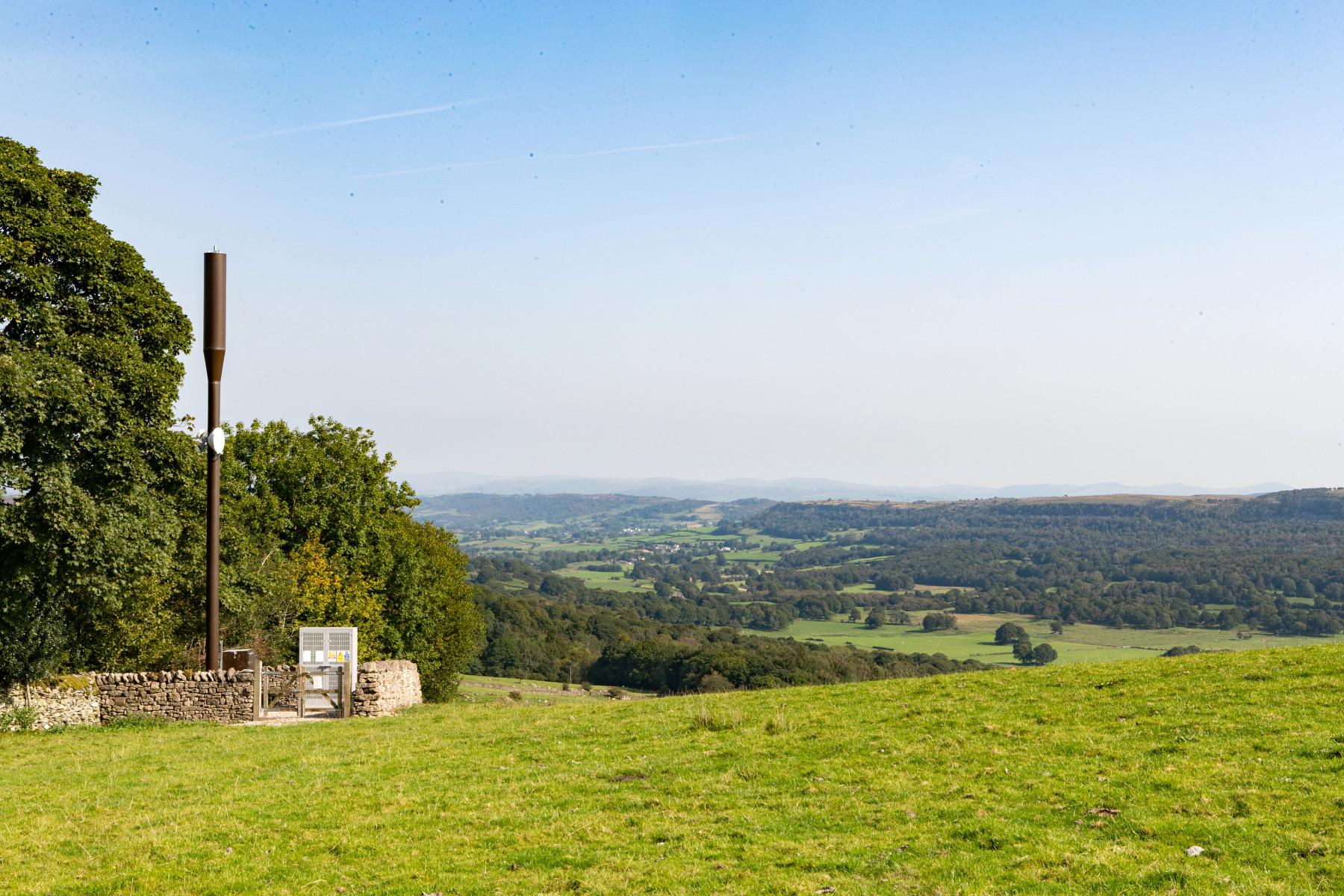
EE 4G mast in elevated location overlooking nearby communities
Deploying mobile masts even in areas that have partial or no coverage can be very difficult as a lot of the time campaigns emerge to block planning permission and distinguishing between genuine objections and simple nimby or anti-mobile scaremongering actions is very difficult. One problem is that often the best location is near to where people want to use their mobile phones, and this attracts lots of complaints about the visual impact.
Mobile coverage in rural areas may be transformed if Starlink direct-to-cell services get approved for use in the UK, first tests are underway and emergency messaging is already possible on iPhone 14 and later phones.
 Test your broadband speed
 Follow us on X for the latest broadband news

Seems like 5 months early, not 6.
Hmm, well EE coverage is still rubbish in and around the Surrey villages of Cranleigh and Ewhurst! They need to do a lot better in the rural areas!
Still patchy across rural areas in the SE including bits of the M25 orbital carpark!