Last year, we published our comprehensive Guide to Online Scams and Traps trying to raise awareness of the dark side of the Internet.
We have updated the guide with key information about the latest scams we’ve seen, and wrote about a new personal story of how a relative of one of our staff fell into a scam call, supposedly from BT.
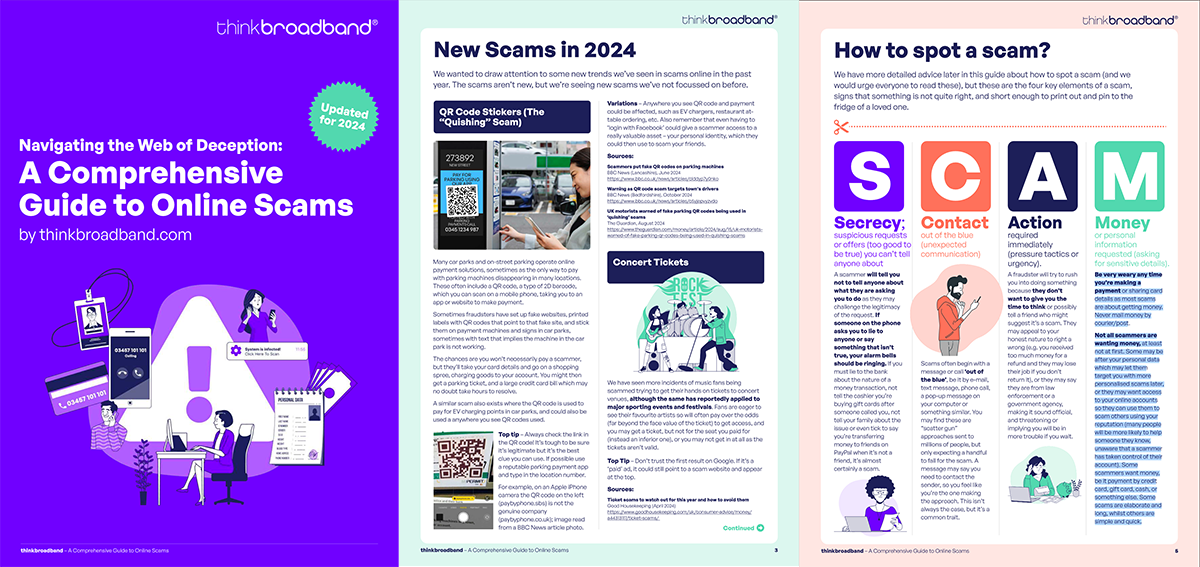
(click the above to read/download our latest 2024 guide in PDF format)
We know most of our readers are more technically minded and probably think they won’t fall for these scams; and most of the time you’re probably right (although in our previous edition we did recount a story affecting one of our staff members who almost fell for it as it was very personalised). However, we all have family and friends and not everyone is as technically adept, as we saw when one of our relatives was affected.
We know the guide is long, but it’s about exposing the wide array of different types of scams. We have simplified our core advice into four principles which you can print out and stick on the fridge. These four signals are worth looking for as a sign of a scam as they be of help in many cases.
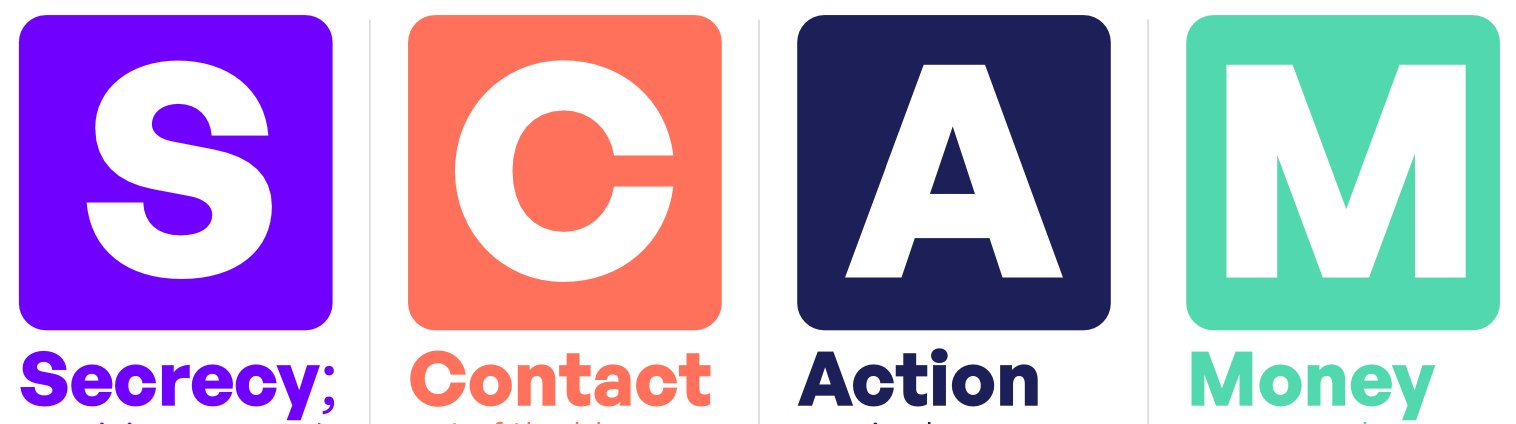
- Secrecy; suspicious requests or offers (too good to be true) you can’t tell anyone about
- Contact out of the blue (unexpected communication)
- Action required immediately (pressure tactics or urgency)
- Money or personal information requested (asking for sensitive details)
We have also covered a few new scams we’ve seen more of recently:
Quishing (QR Code) Scams — Signs at car parks or EV chargers having labels affixed on them with QR codes which take you to websites which collect your personal data.
Concert Tickets Scams — Fake tickets or tickets for seats which don’t meet the description; this is becoming an increasing problem with sold our venues and tickets being sold on third-party platforms for inflated priced.
Fake Unpaid Toll Messages — Scammers are taking advantage of new bridges being built and sending local residents messages about unpaid toll fees, even when there are no tolls on the bridge. This is a follow-on to previous parking charge violation text messages and similar, and highlights a new trend.
AI Voice Cloning — We also cover a couple of examples of voice cloning using AI. Short voice messages or clips played to you could be cloned. The sinister side of this has included calling parents with kids’ voices saying something as simple as “Mum. I messed up” followed by people demanding ransom payments, or finance staff in companies being instructed to make a payment by a senior leader who they ‘spoke’ to.
Go and read Andrew’s story about a relative who fell for a scammer pretending to be from BT talking about broadband problems and ended up getting money taken from their bank account! (page 8)
For more, see our Online Scams page.
 Test your broadband speed
 Follow us on X for the latest broadband news




Leave a reply