One Touch Switching (OTS)
***Applicable for CONSUMER BROADBAND SWITCHES as of 12 SEPTEMBER 2024***
(Our guide on Switching broadband provider may be helpful if you’re considering changing supplier)
The One Touch Switch (OTS) system is a new process in the UK designed to simplify and speed up the switching of broadband providers for consumers. The system is run by The One Touch Switching Company (TOTSCo), which facilitates communication between consumer broadband operators. The new system ensures consumers don’t need to understand the complexity of the underlying systems, although there has been criticism among the industry about the lack of security processes and other cases which may present challenges.
Under the OTS process, the new broadband provider manages the entire switching process on behalf of the consumer. This means that when a customer decides to switch, they only need to contact the new provider, who will handle the coordination with the existing provider to ensure a smooth transition.
The goal of the system is to ease migrations, and Ofcom hopes this will foster a more competitive market. The system is scheduled to go live on 12 September 2024.
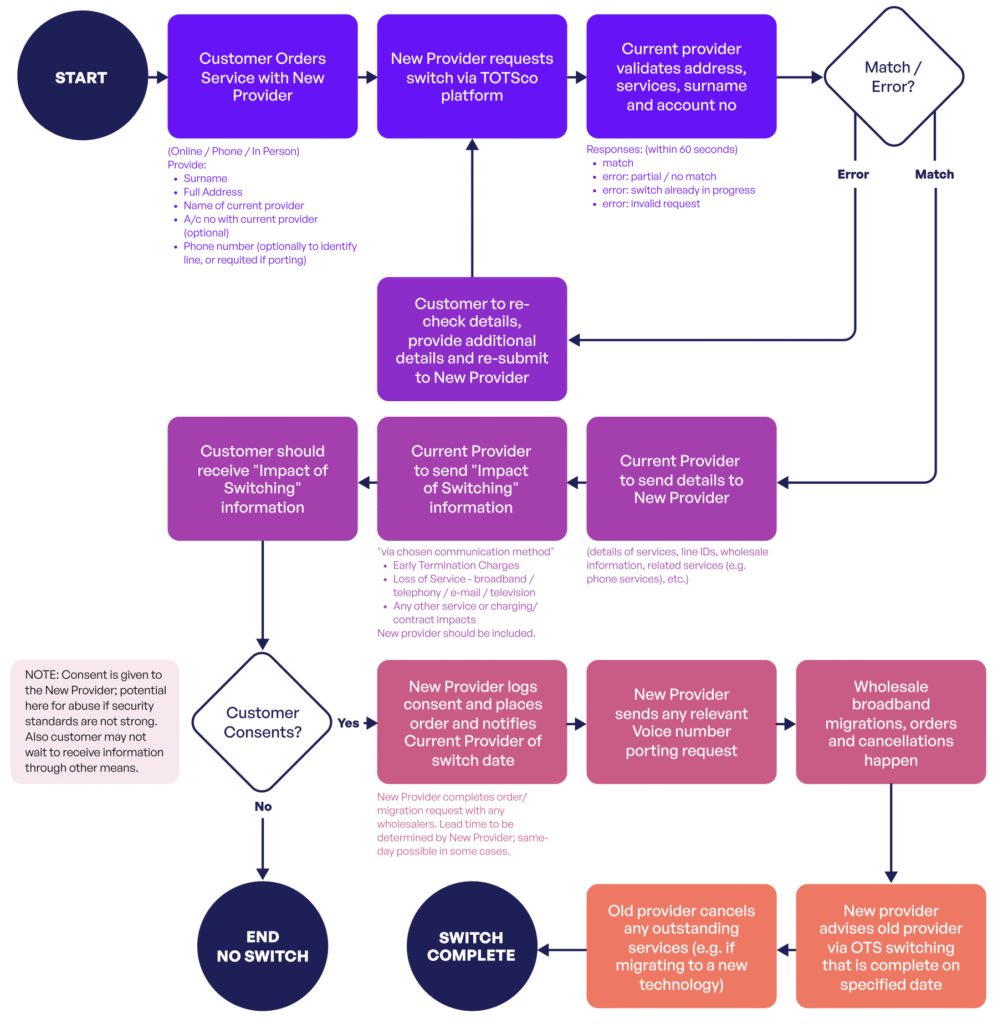
The following chart shows a simple version of the process from a consumer’s perspective:
Switching Process
The following text describes the above diagram.
Step 1: The customer orders a new service with their New Provider. They need to provide details including their Surname, full address, name of their current provider, account number (if available), telephone number (optionally to identify the line or required if porting).
Step 2: The New Provider submits request to switch via the TOTSCo platform which passes the message to the Current Provider.
Step 3: The Current Provider attempts to match the information provided by the consumer to locate an account. They can respond to confirm an exact match or an error as well as detail (partia/no match, switch already in progress and invalid request).
In the event of an error, the customer is asked to check their details, provide any additional details, and go back to Step 2. If a match is found, proceed to next step.
Step 4: The Current Provider sends relevant details to the New Provider (including list of services, line IDs, wholesale information, related services, etc.)
Step 5: The Current Provider sends the “Impact of Switching” information which includes any Early Termination Charges, loss of any related services (e-mail, telephony, television, etc.).
Step 6: Customer receives the “Impact of Switching” information. If they do not consent, the switch process ends. If they consent, then proceed to the next step.
Step 7: New Provider logs the consent from the customer, places any orders with the wholesale providers and notifies the Current Provider of the switch date.
Step 8: New Provider sends any relevant voice porting requests through (if applicable)
Step 9: Wholesale broadband migrations and orders take place.
Step 10: New Provider advises Old Provider that switching is completed and the date.
Step 11: The Old Provider cancels any outstanding services (e.g. if migeating to a new technology).
The switch is complete.
 Test your broadband speed
 Follow us on X for the latest broadband news